
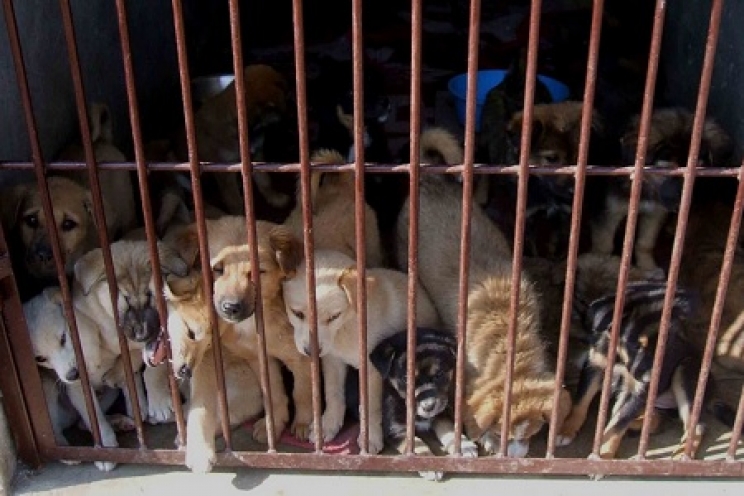
Until a few years ago, many shopkeepers made puppies imported from Eastern Europe available to their customers for very little money, then reselling them in Italy at a multiplied price. The problems associated with this practice, which is unfortunately still widespread today, are numerous and cause serious consequences for animals from breeding facilities and for imported animals. Since 2004, regulations have changed in an effort to protect these animals’ health and psychological and physical well-being.
Until recently, puppy sales were almost always brokered by shopkeepers. The more conscientious ones acted as genuine intermediaries for local breeders, unlike unscrupulous operators who turned to puppy traffickers from Eastern Europe.
As a result, many owners found themselves caring for a puppy in truly poor health from the outset, and above all extremely young—sometimes even under two months old, with all the consequences of early separation from its mother. The passport and health booklet provided were often fake, filled with vaccinations and treatments that had never actually been carried out, with the complicity of an equally unscrupulous veterinarian.
The living conditions of animals in these illegal puppy factories are terrible. Breeding females—dogs and cats kept solely for reproduction—are exhausted and forced to give birth constantly. Separated from essential maternal care after only a few weeks, the puppies are locked inside trucks and transported clandestinely for several days without air or food, walking through their own excrement. Few survive, and those that do survive do so only briefly. Hygiene conditions are appalling, making mass infections from dangerous viruses, bacteria and parasites very easy. Consequently, in most cases the owner becomes attached to a puppy already destined to die soon.
Thanks to a decision by the European Union that came into force on 1 October 2004, the movement of dogs and cats within European countries and elsewhere must always comply with precise rules.
First, as stated in the Decision of 26 November 2003, introducing animals from European Union Member States requires a valid Community Pet Passport, as well as an identifying microchip or tattoo. Any vaccinations and antiparasitic treatments must be recorded in the passport, bearing the stamp and signature of an authorised veterinarian.
For countries outside the European Union, the measures are stricter, specifically to limit puppy trafficking, under the Commission Decision 2004824CE of 1 December 2004.
A health certificate consisting of a single page must be obtained, completed in English or in the language of the destination country by an official veterinarian appointed by the competent authority of the country from which the animal comes. The certificate includes the details of the owner or person accompanying the animal, a description of the animal and its identification details, namely its microchip or tattoo. Finally, it must state that the rabies vaccination has been administered, along with a rabies antibody test where required, and any treatments against parasites and Echinococcus.
 The certificate is valid for four months from the date of signature.
Furthermore, under the European Union Decision, it is prohibited to bring into Italy, whether from EU Member States or Third Countries, dogs and cats under three months of age that have not been vaccinated against rabies. This vaccination may be administered only to animals at least three months old, and is considered valid only 21 days after administration.
Another fundamental measure for animal protection is Law No. 201 of 4 November 2010, according to which “anyone who, in order to procure a profit for themselves or others, repeatedly or through organised activities, introduces companion animals into the national territory […] without individual identification systems and the necessary health certificates and, where required, without an individual passport, shall be punished with imprisonment from three months to one year and a fine of between €3,000 and €15,000.”
Furthermore, “the penalty is increased if the animals are confirmed to be under twelve weeks old or come from areas subject to veterinary-police restrictive measures adopted to combat the spread of communicable diseases affecting the species.”
The main point is that all owners who end up with an illegally imported puppy could risk being accused of the unlawful introduction of companion animals and paying “between €100 and €1,000 for each animal introduced”.
This is certainly a package of regulations full of good intentions towards animals, but it is often insufficient in the fight against illegal puppy trafficking. As mentioned above, traffickers often turn to compliant veterinarians who falsify certificates and passports without any scruples.
For this reason, it is up to us, before anyone else, to become the protagonists in this fight by avoiding buying puppies from shops or through unreliable online advertisements. Even assuming that not everyone prefers to adopt a puppy from a dog or cat shelter—although it is a great act of love—the fact remains that most of us would try at all costs to avoid fuelling a market of suffering such as the illegal trafficking of puppies from Eastern Europe.
The main advice is to purchase pedigree puppies only from reputable breeders, preferably nearby, visiting their premises more than once, reading reviews from other buyers, going personally to the breeding facility throughout the pregnancy, following the puppy’s growth until it reaches the appropriate age for adoption, namely no earlier than 3 months of age.