
In our articles, we often say that preventing diseases in animals, whether dogs or cats, is always the best way to ensure that our friends do not suffer from potentially very serious problems. Of course, this does not mean keeping them in a gilded cage, especially cats, which could suffer greatly from it, but rather that when we notice something wrong, we must act as soon as possible to prevent things from getting worse.
Feline papillomavirus is a perfect example of a disease that is not particularly serious in itself, giving us plenty of time to notice its presence and act, but which can become very serious if we do nothing, because it can pave the way for something much worse.
What it is
Papillomavirus is a fairly contagious DNA virus that, however, affects only members of a single species: in short, feline papillomavirus does not infect humans, just as human papillomavirus (or, more precisely, the female form) does not infect cats. There is some doubt about whether the bovine version can infect cats, but it is so unlikely that a cat would come into contact with a cow, especially in urban areas, that we can disregard this possibility.
The most frequent route of transmission is obviously from cat to cat. The virus affects the skin, although it can sometimes settle in the mouth, and clearly cats that fight with each other can easily pass it on.
It should be said that, as a virus, it is not particularly aggressive, because the lesions it causes usually appear when the cat is already affected by debilitating diseases such as FIV.
What it does
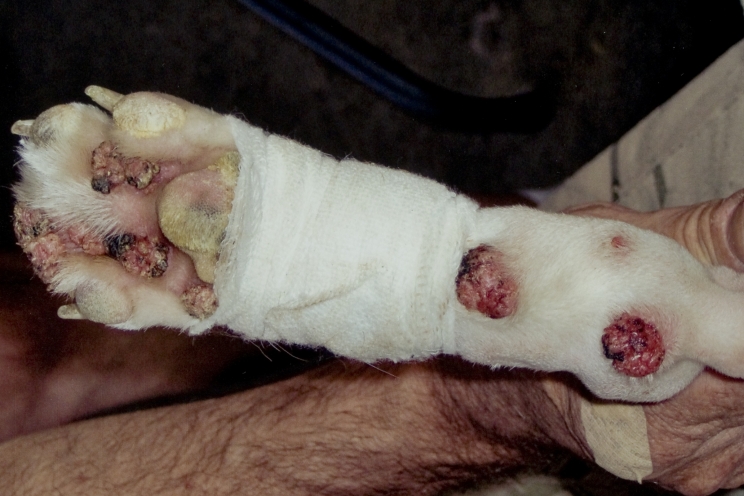
The virus infects skin cells and causes them to multiply and grow. The result is very similar to a tumor, but in fact it is not, at least initially, because it is not the cell that begins multiplying on its own, as happens in a neoplasm; rather, it is driven by the virus. However, it cannot be ruled out that a papillomatous lesion may become a true neoplasm if left untreated.
What an owner notices is that one day, while stroking the cat, they see a small swelling. So far, nothing unusual: it could simply be an insect bite. If it does not grow, it could be a small skin abnormality, like one of the marks we also have somewhere on our bodies, and nothing to worry about.
However, if we notice that the swelling grows like a little tree, with a “trunk” at the base and a crown above, it is time to consult a vet. It grows slowly, so there is no need to take the cat to a clinic at four in the morning, but we should arrange to take it within 2–3 days.
Unfortunately, the only way to establish exactly what the lesion is involves histology, that is, cutting off a piece of the swelling, processing it and examining it under a microscope, so it will take at least a week to receive answers. If it really is a papilloma, as owners we then have several options.
How it is treated
Although the swelling does not cause the cat pain, at most a little discomfort, it should be removed both because it can become a neoplasm, as mentioned earlier, and because if it grows too much it can ulcerate and bleed—in short, it can cause the cat intense pain.
There are various treatment options: medication can be tried, such as interferon, which limits cell multiplication and thus prevents growth; or surgery can be attempted, putting the cat under anesthesia and removing the growth with a scalpel. In the latter case, however, we can be fairly sure that the problem will recur after some time because the virus remains (there is no way to eliminate it) and the area is stressed by the surgery, making it favorable for the virus to develop.
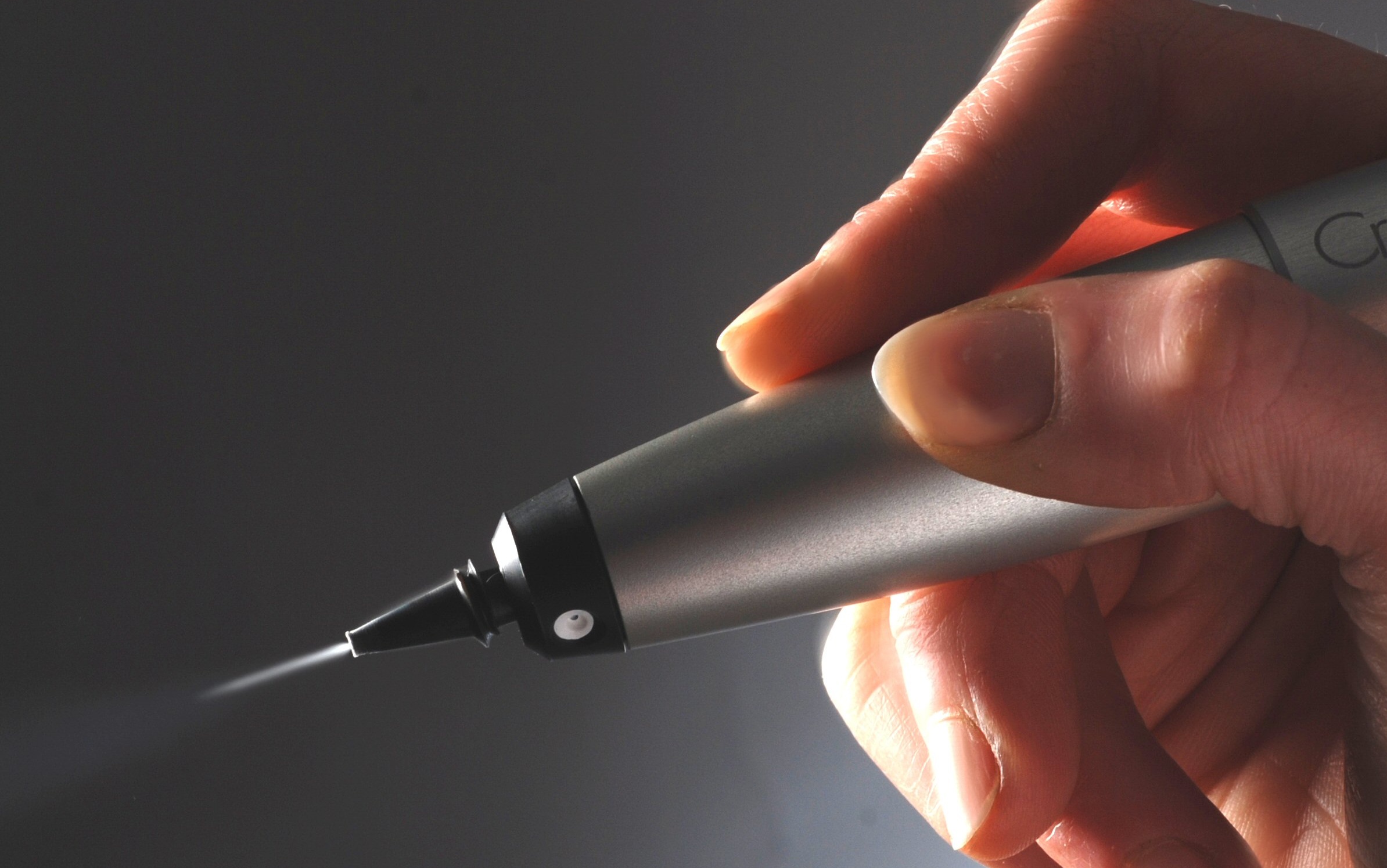
Other alternatives are laser therapy and cryosurgery, that is, removing the “affected” part after freezing it, so that the whole process is less irritating for the body and the condition does not recur (or at least does so less frequently). It should be taken into account, however, that these treatments are quite expensive and require several sessions.
In short, there is no shortage of options, and even if recurrences occur, treatment can be repeated and a virtually normal life can be guaranteed for the cat indefinitely, since this disease is not associated with any particular problems. This is true, however, as long as we do something, anything, whereas the biggest mistake we can make is to ignore it and leave the growth where it is, where it can cause the cat severe discomfort and transform into a neoplasm or otherwise open the way to infectious diseases far worse than this one.