
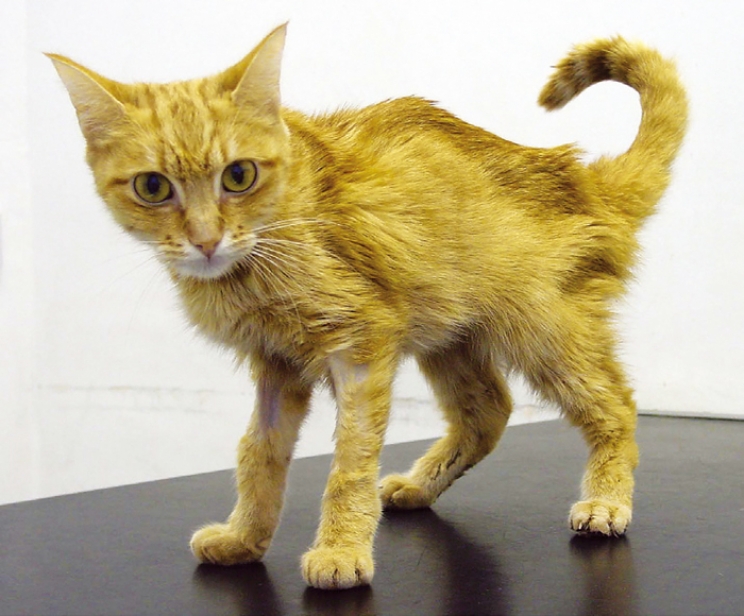
The kidneys are among the most important organs in the body. We generally take them for granted, and when we think of vital organs, we think of the heart or the brain: many people do not know that if the kidneys stop functioning, you die.
This applies both to us and to our pets. As loving owners who do everything possible to ensure a peaceful life for our dogs and cats, it is important to realize when something is wrong with the kidneys—something that is not easy—and to act as soon as possible.
Chronic kidney failure
The kidney’s main job is to filter the blood and thereby eliminate toxic substances that are ingested with food or produced by the body itself: what are commonly called waste products.
If the kidney suddenly stopped functioning (acute kidney failure), for reasons such as kidney infections, we would notice. The animal would be unwell, would not eat, would have a fever, and anyone would take it straight to the veterinarian. Moreover, because it occurs suddenly, this condition can be resolved and the animal makes a full recovery.
However, if there is a situation of chronic kidney failure, things are different.
The kidney is an organ that cannot regenerate, and once it is destroyed, it remains so. The only possibilities for survival are dialysis (an artificial kidney) or transplantation.
Its advantage, however, is that the kidney has a great capacity for compensation. If 30% has stopped functioning, the remaining 70% rolls up its sleeves and manages to do the work of the missing part as well. Think of people who are missing one kidney and are able to live perfectly well with the other.
Chronic kidney failure occurs mainly in older animals because the factors that cause it must act for a very, very long time.
A poor but not severely inadequate diet, too many medications taken over the course of a lifetime, environmental problems, minor kidney malformations, and infectious diseases such as feline infectious peritonitis are among the many causes that can slightly damage the kidney but, over time, lead to the loss of its function.
At first, this loss is not visible at all, so we do not know whether it is present. At some point, symptoms begin to appear, becoming increasingly evident over a long period of time—several months.
Knowing how to recognize them early means, in most cases, saving the dog’s or cat’s life, because there is a “point of no return” beyond which the chances of survival are low.
How to recognize chronic kidney failure
When there are no symptoms, obviously no one can tell that the kidneys are beginning to malfunction. Not even the veterinarian can, precisely because the kidneys can compensate for the loss of function, and blood and urine tests appear normal.
We begin to realize that something is wrong when the dog or cat starts drinking and urinating more than usual. Up to that point, the cause could be the heat or physical activity. We should not panic, but we should begin paying attention to everything we will mention shortly, especially if the animal is older.
The dog or cat will gradually begin to eat less.
In fact, for normal functioning, the kidney first filters and then reabsorbs, because it filters slightly too much. Initially, reabsorption stops working, and more water than normal ends up in the urine; this is why the animal urinates more (and drinks more to compensate).
Then the part that filters stops working: toxic substances remain in the blood instead of being expelled, initially causing a general feeling of illness.
As mentioned, this feeling of illness leads the animal to eat less. As a consequence, eating less also causes the animal to lose weight.
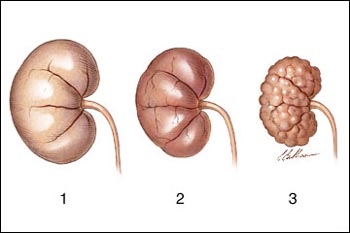
Later, these toxic substances will cause problems in other systems: one is the stomach, and the animal will vomit increasingly often; another is the intestine, resulting in diarrhea. Then there are the mucous membranes, and the animal will develop ulcers in its mouth, particularly noticeable when it yawns—red and painful.
From there, the condition will worsen rather quickly. We will notice because the animal’s breath will smell like urine and because the animal will barely move and will sleep all the time. This is when the kidneys are barely functioning, and the animal is essentially poisoned by all the toxins circulating in its body.
We must not let the situation reach this point. If the animal starts drinking more, occasionally vomits, or has intermittent diarrhea that goes away after a few days and then returns… Take it to the veterinarian; do not put it off.
At this point, the condition is clearly evident in the test results, and the sooner we recognize it, the sooner treatment can begin. Treatment will maintain the kidneys in their current condition and will include medication, physical activity, and a change in diet. The kidneys cannot heal, but we can prevent them from worsening and keep the condition as it is.
For this to be possible, treatment must be continued for life: stopping it means that the kidneys will begin to deteriorate again.
Chronic kidney failure is one of the main causes of death “from old age” in people and animals. Realizing that it is present means diagnosing it, and diagnosing it means giving the animal months, if not years, of life, when the only effective treatments in the terminal stage—dialysis and transplantation—are impractical for many owners nowadays.