

l dog barks all night and your neighbors keep threatening to call the police? There are many ways to teach a dog not to bark, but first of all it is important to understand why dogs bark. Let’s find out together.
Why does the dog bark?
Dogs can communicate with their owners and other animals through a wide range of vocal and non-vocal expressions. Non-verbal language is one of the most important forms of communication, so it is essential to recognize it.
At the same time, however, we must not overlook our dog’s voice, which is expressed through an infinite variety of sounds. The main one is barking, but we also find growling, whining, howling and murmuring.
Let’s briefly see what each of these sounds indicates:
-
Barking: a dog may use it to signal danger, request attention, play, or as an outlet for dogs that are bored or stressed;
-
Murmuring: the dog snorts and murmurs, especially before starting to bark to get our attention;
-
Whining: this is the typical whimper, very similar to a whine. It may indicate different moods, such as sadness, fear or pain;
-
Yelping: a yelp is very similar to barking, but it is repeated and prolonged;
-
Howling: this is the classic sound we make when we want to imitate a wolf. It represents a call to the owner or other animals;
-
Growling: a dog growls to warn that it is about to attack, or it may growl playfully, especially when dealing with one of its favorite toys.
In the specific case of barking, there are many reasons that lead a dog to “talk” to us in this way. Let’s look at the main ones:
-
“There’s danger!”: this is an alarm bark, typical of dogs that want to communicate a real or presumed danger. The reliability of the warning depends mainly on the dog’s perception, which may sometimes mistake normal situations for dangerous ones;
-
“Hey, pay attention to me!”: a dog may also bark because it wants our attention. This type of sound is usually preceded by a quiet murmur;
-
“Let me catch that cat!”: a hysterical and euphoric bark almost always indicates frustration or excitement, especially when the dog sees something that has attracted its attention but is out of reach;
-
“I’m bored”: a bored dog may often bark listlessly, as if it had nothing better to do. This is typical of dogs that live in the garden and occurs especially at night;
-
“I’m anxious!”: when dealing with problems such as separation anxiety or fear, a dog may vocalize for a long time, especially with hysterical howls and yelps, particularly when the owner is absent;
-
“Play with me”: some dogs, especially herding dogs, tend to become excited during play to the point of starting to bark and nip at our trousers or hands.
In some cases, the habit of barking is related to the breed. Among the dogs that bark the most are Hounds (Beagles, Fox Terriers, Yorkshire Terriers), herding dogs and some Toy breeds. Conversely, the breeds least inclined to bark paradoxically include guard dogs, which are instead accustomed to vocalizing only when necessary.
What to do
First of all, using anti-bark collars is not the most appropriate solution. 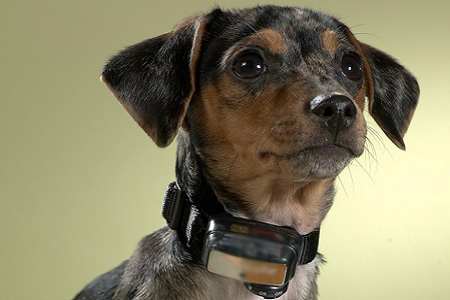
Unfortunately, various collars are available that can detect when an animal is barking, then spray water onto its muzzle, emit an extremely irritating ultrasound for the dog or, worse still, deliver an electric shock.
These solutions rely on so-called “positive punishment”, creating an association in the dog’s mind of “barking-punishment”.
Instead, we can put into practice some advice recommended by experts. We can therefore rely primarily on the concept of “positive reinforcement”, creating an association of “not barking-reward” using treats or a clicker.
There are several possible approaches:
-
Teach the dog to bark on command: encourage the dog to bark, for example by simulating play, rewarding it with a treat or a click when it barks. Later, introduce the verbal command “bark”, rewarding it again whenever it responds to the request. We can then add a stop command, such as “ssshhh”, rewarding the dog as soon as it stops. This is excellent for dogs that bark to play or ask for attention;
-
Distract the dog from the stimulus: in this case, we must teach the dog to respond to the verbal command “Here!”; whenever it is barking, we will say it and the dog must come to our call. To do this, begin in an isolated room. Each time you say “Here!” while remaining silent, the dog should come to you, and you can reward it with a click and a treat. Gradually add increasingly interesting stimuli for the dog, until it can perform the command even outside the home;
-
Ignore it: this method is especially effective for dogs that bark to attract attention. Avoid scolding, petting or even looking it in the eyes. A dog seeking attention will feel acknowledged even by a glance, reinforcing the behavior we want to avoid;
-
Give it a distraction: if the dog barks out of boredom, we must make sure its days are full of stimulation even in our absence. Choose the most appropriate solitary toys , especially intelligence toys that keep the dog occupied for a long time.
As you can see, there are many “positive” ways to teach a dog not to bark without reason. Before punishing it or resorting to extreme advice, let’s start with simpler measures that are proven to work.