
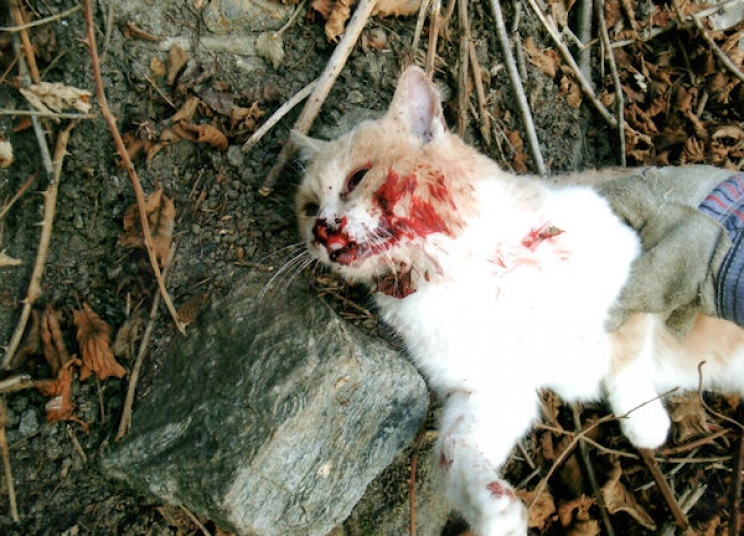
This page discusses diaphragmatic hernia, one of the most frequent complications of trauma that our dogs and cats can suffer.
It is one of those conditions that we must hope our dog or cat never experiences: it is one of the most complex to resolve, while in some cases it cannot be resolved and the prognosis is fatal.
This article is intended to help you understand, especially if you have a cat, whether this condition is present and encourage you to take it to a veterinarian as soon as possible: if we act quickly enough, it can in fact be resolved more easily.
What it is
The trunk of mammals, both ours and that of dogs and cats, is divided into two parts: the thorax, which contains the heart and lungs and is surrounded by the ribs, and the abdomen, where the stomach, liver, kidneys, intestines, bladder, uterus, and so on are located. It is the “flaccid” part—in other words, the belly.
These two cavities are separated by a flat muscle that “cuts” the trunk in half: the diaphragm. The diaphragm completely separates the thorax and abdomen, except for three openings through which an artery, a vein, and the esophagus—the tube that carries food from the mouth to the stomach—pass.
We have a diaphragmatic hernia when the abdominal organs, mainly the stomach and liver, enter the thorax.
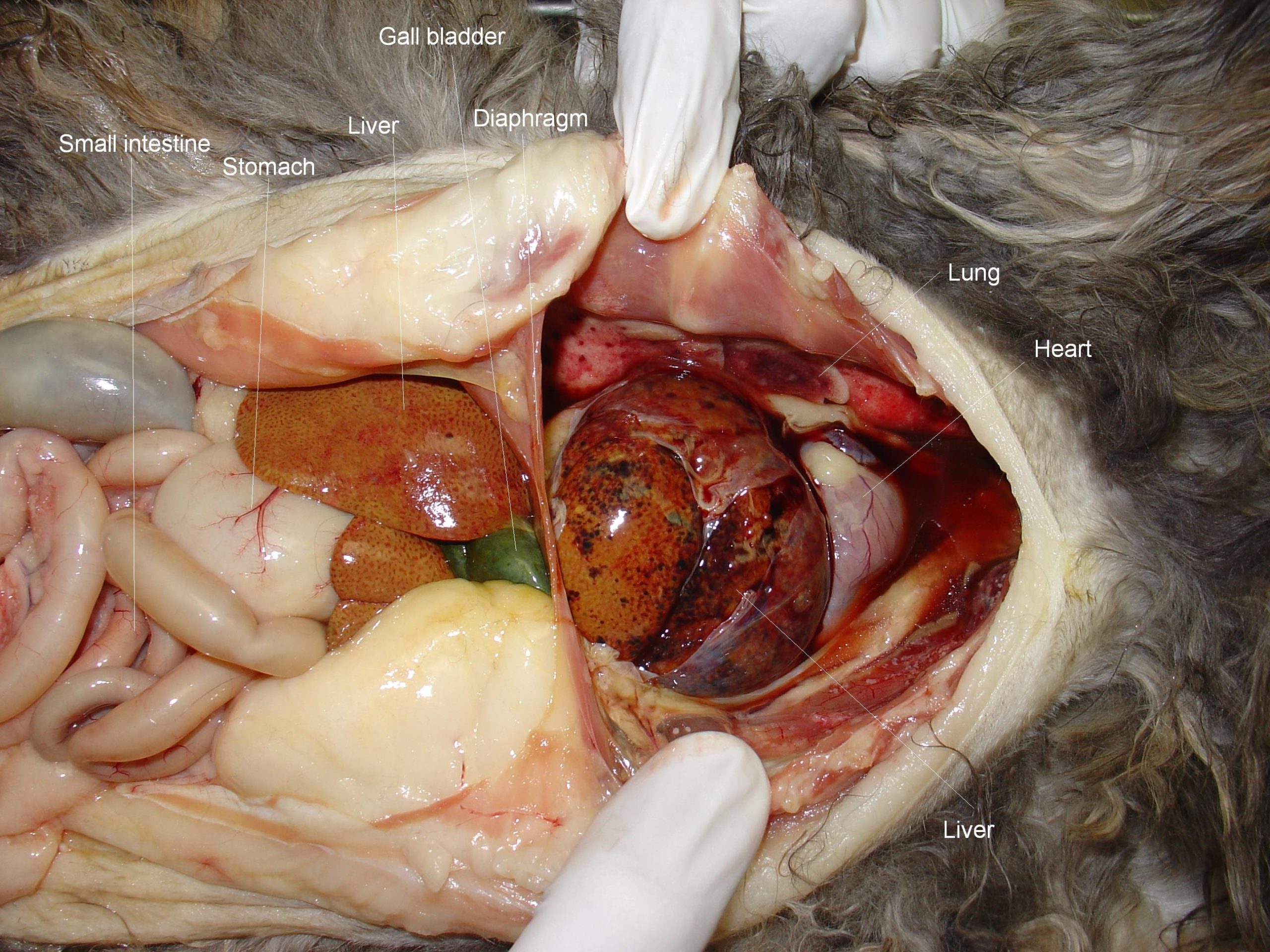
The problem is that the thorax must be occupied largely by the lungs, which are essentially empty and contain air. If other organs occupy their place, less air will enter and the animal will have difficulty breathing.
It takes force to push the abdominal organs into the thorax, and that force is usually a very violent impact: a moving car or the ground after a fall from several floors.
Depending on how the impact occurs, the diaphragm, which is broad and thin, may tear, and since the lungs always tend to contract somewhat like a balloon when it has not been tied, they draw the abdominal organs into the thorax.
Veterinary treatment consists of putting everything back into place. If we were present at the time of the accident, as often happens with dogs (or, in any case, if the dog had gone into the street, someone would notify us), we take it immediately to a veterinarian, who will do everything necessary to help the animal recover as soon as possible.
With cats, however, things are somewhat different. Cats are not taken out on leashes, and many people let them roam on their own, leaving and returning whenever they choose.
Sometimes they stay away for three or four days, and if they have suffered trauma but recovered, they may appear normal. In reality, they are not well, but perhaps we notice that they are not eating, are breathing poorly, or are moving strangely. So we say, “it will pass.”
Instead, the situation is more serious than we think.
The organs will be adapting to the new situation, but meanwhile the lungs will work with increasing difficulty and the ability to breathe will continue to decline, eventually leading to lung collapse and death.
The longer we wait, the worse the situation becomes: the organs, arranged differently from normal, will begin to adhere to one another, and this will often obstruct the passage of food through the digestive tract because the intestine could develop “strangulations”.
Veterinarians will try to resolve the problem, but in some cases it is impossible even to move anything without causing further damage, and there will be nothing more that can be done.
How to recognize the condition
As owners, the only thing we can do is recognize this condition and take the animal to an equipped clinic.
First, there must have been a violent impact. If we have been with the dog all day, it probably will not have this problem, but if we left it at home and found it outside, it could have fallen from a window. The same applies to a cat, which may have been in an accident as explained above.
The symptoms are not distinctive, and this is why the seriousness of the situation is sometimes not understood.
First, the animal breathes laboriously. Its breaths are deep but rapid because it inhales little air.
It will also have difficulty eating and will often refuse food, even if it is very appetizing. It will not want to move, will stop after a few steps to catch its breath, and may walk with an unusual gait because the impact may also have caused fractures.
What is important is to put “two and two together” and not say, “it has a fever and will be better tomorrow.” After reading this page, you are aware that this problem exists. Hoping it never happens to you or anyone you know, you now know how to recognize it and can understand how serious it is.