
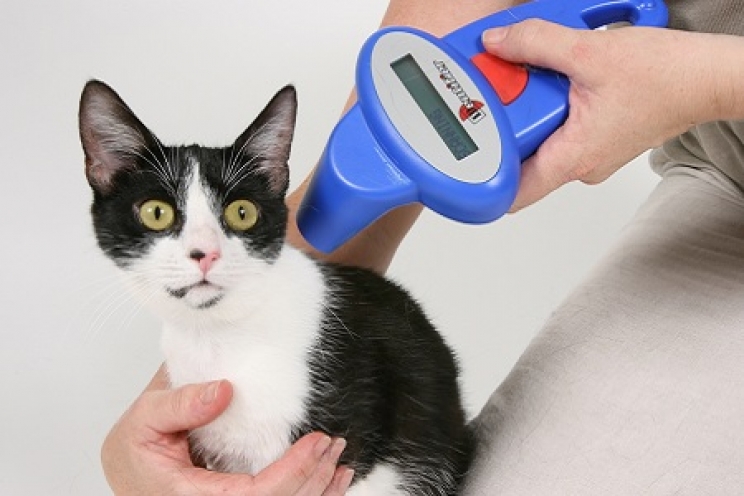
When people talk about microchips for animals, it is inevitable to think immediately of dogs. In reality, the National Registry database is not a service exclusively for Fido; for some time now, our feline friends have also been able to access it. But what does the feline registry involve, and how does the microchip for cats work?
How it works
All cat owners can request registration of their four-legged friend in the National Feline Registry database by visiting a veterinarian who has chosen to participate in the service.
Simply consult the official page to search among the many veterinarians available throughout Italy and choose the closest one. Always request a professional who is properly registered with the professional association, but above all one who is authorized to provide the microchip implantation and registration service.
During the appointment, the veterinarian can proceed with implanting the microchip, which is placed under the animal’s skin using a special syringe. It is a quick, immediate and painless procedure.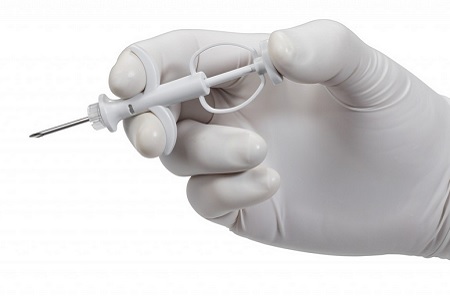
Each microchip is associated with an identification code, readable using a special device that should be provided to all veterinarians, police officers and carabinieri, so that the animal’s owner can be easily traced.
Once the microchip has been implanted, the veterinarian will register the corresponding code in the national database, entering other information, including:
-
Owner’s first and last name;
-
Owner’s address;
-
Cat’s name, breed, sex and age;
-
Whether the cat has been sterilized;
-
Previous thefts or disappearances;
-
Possible death of the cat.
All this information is associated with the identification code and can be consulted at any time by entering the numerical code on the service’s official page.
What happens if a cat is found or goes missing
If our cat has gone missing, we can go to the local authorities and report the animal’s disappearance.
If someone manages to find our animal, they can contact a veterinarian, 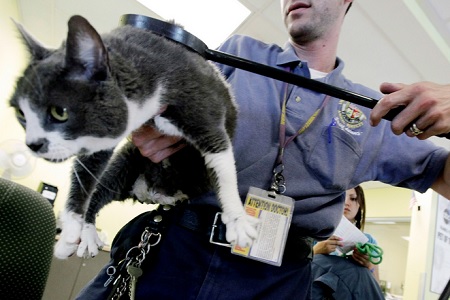 the police or the carabinieri to request that the microchip be read.
By reading the microchip directly on the animal’s body, it is possible to view the identification code in real time. By entering this code on the National Feline Registry page, the veterinarian or relevant authorities can easily access all information about the cat and its owner.
In this way, we can be contacted quickly to retrieve our cat.
Unlike the service provided for dogs, this service is not yet mandatory, but its main objective is to ensure greater control over the number of cats living in colonies, making it easier for veterinarians appointed by local health services to sterilize stray cats.
Unfortunately, the number of cats registered with the Feline Registry is still limited. Consequently, this makes it more difficult to report and find many missing or found cats. In fact, people who find a stray cat do not always go to the authorities or a veterinarian to check whether it has a microchip, precisely because, unlike with dogs, awareness of the feline database is not widespread.
In any case, the aim is to spread the information as widely as possible so that most cats living in homes and on the streets can be registered.