
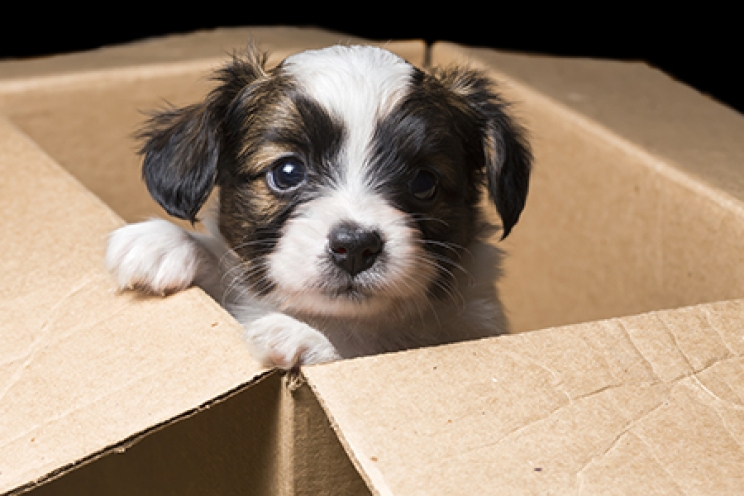
When you choose to adopt a dog, you need to consider many aspects. First of all, it is very important to understand the responsibilities that having a dog at home entails, not only in terms of commitments, but also emotionally. A dog must not be a passing whim, only to be abandoned as soon as we realize that we do not have enough time or patience to give it what it deserves. A dog must be loved and cared for, so that day after day you can create a unique and irreplaceable bond.
With this small but important premise in mind, if you are thinking of adopting a puppy, this guide will help you learn everything you need to know to take your first steps with your new friend.
What you need
Even before bringing your new arrival home, you should make sure you have everything they may need. The essential equipment includes:
-
Food and bowls: make sure you have food and water and food bowls available, essential from the very first moment;
-
Bed: there are no particular guidelines for choosing a bed. The important thing is that it is comfortable and clean, and that it is placed in a spot sufficiently sheltered from prying eyes and loud noises;
-
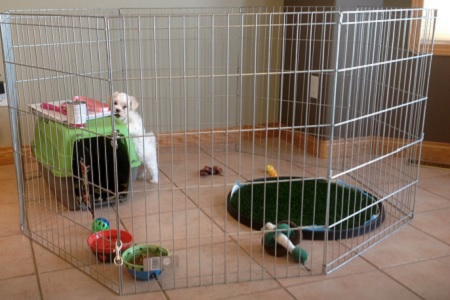
Puppy pads: during the first period, your puppy will need some time to learn the proper timing and way to relieve itself outside. For this reason, it may be useful to place puppy pads that it can use when it really cannot hold it, without making a mess around the house;
-
Collar and leash: you will need them to take the dog for walks, so choose a model suited to the dog’s breed and age. For example, for an adult dog that pulls on the leash and simply cannot understand that it should not walk you but rather the other way around, a harness may be useful. For more information, see the full article on choosing a collar or harness. In any case, make sure your dog always wears a collar, and attach ID tags with your telephone number in case it runs away;
-
Toys: dogs usually love playing with their owners, but they may also need some more solitary toys to occupy their time without destroying the furniture. So get both balls to throw, frisbees or other interactive games, and objects specifically designed for dogs to chew without the risk of swallowing them;
-
Rewards: it is never too early to teach a dog the right rules. Raising your hands or shouting at it will achieve nothing. Instead, you should use treats and affection.
Arriving Home
One of the most enjoyable aspects of adopting a puppy is certainly choosing a suitable name. Remember, however, that the name will not only be its calling card, but also the sound the puppy will associate with itself for the rest of its life. 
For this reason, make sure it is clear and immediate. Avoid choosing long and complex names, however grand-sounding. Ivan the Terrible the Twenty-Third may give your dog a certain air, but it probably will never respond to you.
Once your dog has finally arrived home, let it stay with you, without stressing it too much. Leave it alone and let it play when needed, but try not to leave it alone for too long.
A visit to the veterinarian is essential for the new arrival. The veterinarian can examine the puppy, rule out any health problems, implant its identification microchip and begin its vaccination schedule. If you hear people mention “deworming”, do not be frightened, because most puppies have intestinal parasites, which can easily be removed during the first veterinary visit with specific medication.
Remember that the puppy must absolutely not be taken for walks before vaccination. By sniffing other animals’ “business,” it could contract certain diseases, so wait for the veterinarian’s approval and use puppy pads in the meantime.
The Rules
Now that your puppy is finally home, you are surely eager to teach it all those spectacular commands you have seen on television. Well, your expectations may remain unmet for at least a few months. The puppy needs to play, sleep and be cuddled.
That does not mean this is not the most suitable time to start teaching it the basic rules of good behavior, because the puppy is very receptive. Here are some aspects and commands the puppy can begin to understand:
-
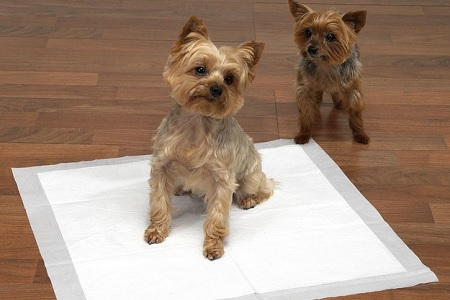
Relieving itself on the pad: the puppy may be disoriented by arriving in its new home and will not always be able to associate the puppy pad with relieving itself. Help it by rewarding it with affection and treats when it succeeds. If you see it relieving itself elsewhere, stop it immediately with a loud noise or a firm “no!” and direct it toward the pad. Remember that scolding it if you find little presents on the floor in the morning makes no sense. The dog does not speak our language, so it has absolutely no idea what you are talking about;
-
Relieving itself outside: once the puppy is vaccinated, it can be taken outside for its daily walk. On average, a puppy needs to urinate at least every three hours. Do not expect it to hold everything for very long right away, as an adult dog does. Instead, take it outside whenever it asks. If it starts whining while looking at the door or sniffing the floor, take it outside. Fixed times include the morning upon waking, after food and before bedtime. Always remember to reward it whenever it succeeds in the right place;
-
Staying alone: puppies are terrified of being left alone at home, but you certainly cannot give up going to work. You will therefore need to teach your new friend that nothing will happen if it spends a few hours alone and that you will return home. In any case, to prevent the puppy from hurting itself or causing damage in the house, try to leave it in a safe room at least until you return. During the first month, avoid staying away for too long. If possible, do not go out for more than two or three hours, or ask a neighbor to check on the puppy;
-
Getting used to the leash: no puppy is born knowing what a leash is or how it works. Many owners end up dragging the dog and leash until they give up and carry it home. To teach the puppy to stay alongside its owner, stand beside it, then take a step and call it. When it approaches, reward it. Continue until your dog automatically connects moving forward with the reward and proceeds on its own;
-
Letting go: this is one of the most important behaviors every dog should learn. From puppyhood, the dog should know that, if you ask, it must immediately give you whatever it is chewing. In the countryside or at the park, it may manage to find strange objects or suspicious food. If it has not learned this command, it may continue eating or chewing them, putting its health at risk. To get your dog to hand over its “prey,” use the trading technique. If it lets go of what is in its mouth, give it its favorite toy or a reward;
-
Not biting: the puppy, especially while changing its “milk teeth,” may bite anything in front of it, including your hands, shoes and household furniture. To prevent it from doing so while you are cuddling it, as soon as it starts biting your hand, withdraw it immediately with a firm “no!” Then turn your back with your arms folded and ignore it. If it begins to calm down after a few minutes, you can continue. Similarly, if you see it chewing your slippers, say the classic “no!” and then offer it one of its favorite toys.
How to Behave with Other Dogs in the Home
If you already have an adult dog, before introducing the newcomer, you should let it know that the puppy is there without allowing it to see it. Let it smell its toys or blanket, but always keep them at a safe distance. After a few days, try letting the puppy leave its room, preferably while your dog is out for a walk. Do not let them meet, but allow them to become familiar with each other’s smells.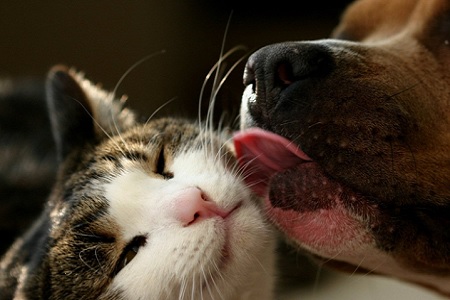
After following these preliminary steps, you can let them meet, preferably in a neutral area. For example, at the park or in the garden. Let them sniff and study each other until they understand that the smell they detect is the same one they found at home. Once they have connected the two things, you can arrange for them to meet indoors as well.
Keep an eye on them at least the first few times, to prevent the puppy from bothering the adult dog, which might react aggressively.
If the other animal in the home is an adult cat, there will likewise be no major coexistence problems. Compared with dogs, cats are fairly independent and territorial, so you can increase the number of members in your family as much as you like, provided they continue to have their own spaces. In the case of a cat and a dog, this is even easier, because cats usually tend to hide in the highest and most inaccessible places in the home even without other housemates. Make sure the puppy respects your cat’s boundaries, does not steal its food and does not take over its bed.
In both cases, do not put the puppy first, or the other animal will suffer. Be balanced and no one will suffer from jealousy. Most likely, after an initial adjustment period, your dog or cat will be the one unable to live without the newcomer.