
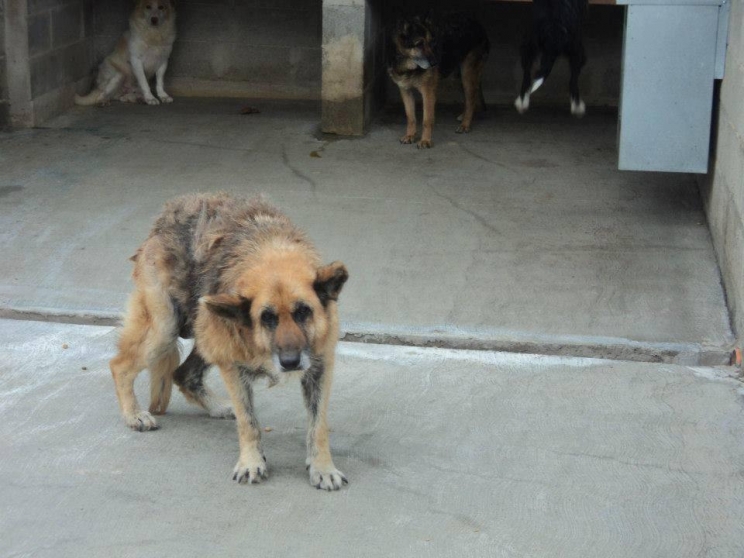
Leishmaniasis is probably one of the best-known diseases when it comes to dogs. The information often heard is somewhat contradictory. For example, people never talk about cats, even though the disease affects them too. Vaccines are often mentioned, although there are still many doubts about them. People say mosquitoes transmit it, but that is not true. It is also said to be a bacterium, but it is not.
So let us dispel a few myths and try to understand how one of the most complex and difficult-to-treat diseases in animals works.
What it is and how it is transmitted
When talking about Leishmania, it is already difficult to explain what it is.
Among eukaryotic organisms (those that eat to obtain energy), there are five kingdoms: Animals, Plants, Fungi, Bacteria, and Protists. You have probably heard of organisms from the first four kingdoms, but none from the last. Well, Leishmania is a protist. We can think of it as something halfway between a bacterium and a very, very simple animal.
It is a microorganism visible only under a microscope, injected into the blood of a dog or cat (and also humans, although it causes very little harm) by an insect.
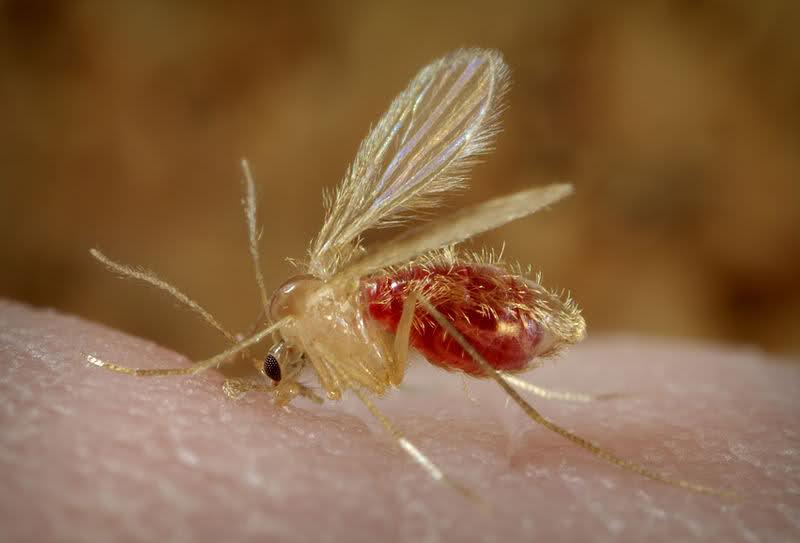
The insect is a sand fly, also called a phlebotomine (because it feeds, that is, bites, and then stays quiet, so it cannot be heard), which is smaller than a mosquito and resembles a gnat.
If this insect bites an infected dog, it becomes infected in turn. Leishmania has two forms: a mobile form and an immobile form. In the dog’s body, it is found in the latter form, which becomes mobile once it reaches the sand fly’s intestine. It travels upward, reaches the proboscis (the stinger, so to speak), and is injected into the blood, where, being able to move, it multiplies, spreads throughout the body, and then becomes immobile again.
What it does
If you found it difficult to understand what Leishmania is, know that understanding why it causes disease is even more complex. Bacteria generally “feed” in the dog’s body at its expense. Leishmania does not.
In practice, as soon as the parasite enters the body, it is “eaten” by white blood cells, which try to digest it in order to destroy it. Unfortunately, it survives this digestion (becoming immobile again, among other things) and continues to multiply.
The body therefore tries to fight it through antibodies, special proteins that, once attached to a pathogen, signal to the “eating” white blood cells (macrophages) that they must consume it. But, as we have already said, they cannot digest or destroy it.
This causes the antibodies attached to part of the Leishmania to begin circulating freely in the body and then settle in specific areas: they settle in the eye and cause vision problems; they settle in the skin and cause scaling (the typical dandruff of leishmaniasis); they settle in the joints and cause problems when the dog or cat walks. However, they also settle throughout the blood vessels, veins, and arteries, whose walls become damaged, causing tiny but widespread blood losses.
Finally, they settle in the kidney, causing kidney failure, one of the disease’s worst consequences.
All this leads to severe lethargy, fever, movement problems, and increasingly serious consequences over time. However, the entire process is characterized by being slow.
In some cases, only some of these symptoms appear, not all of them: we must be very careful, and if we notice any of the signs described above, take the dog or cat to a veterinarian, who will seek a solution to the problem.
How it is treated and prevented
Leishmania is very difficult to treat. It is resistant in the animal’s body, so medications do not work optimally; therapy is often symptomatic, meaning that medications are given to correct, one by one, the symptoms caused by the disease; if the animal improves, specific medications also work better and recovery may be possible.
However, the parasite is never eliminated, but remains in the body for life, so any concurrent disease may cause a relapse, which is also always worse than the previous episode.
As for prevention, there is much discussion of a vaccine: some vaccines against Leishmania exist, but their effectiveness is still rather uncertain, and they do not always work.
The main solution, although difficult, should be prevention at the source, namely avoiding sand-fly bites. We can do this first by avoiding very humid places rich in mosquitoes (and therefore sand flies too) and by providing our dog with repellent collars or specific products to apply along its back, thus preventing the insect from approaching and avoiding all that follows.
By preventing bites, we will protect our dog’s health and prevent it, if infected, from transmitting the infection to other animals.