
Jaundice is not actually a disease. It can in fact be defined as a symptom, like vomiting, diarrhea, or red, blood-containing urine. However, it is not something so obvious, but rather a fairly subtle condition, and we decided to write this article to try to understand what causes it.
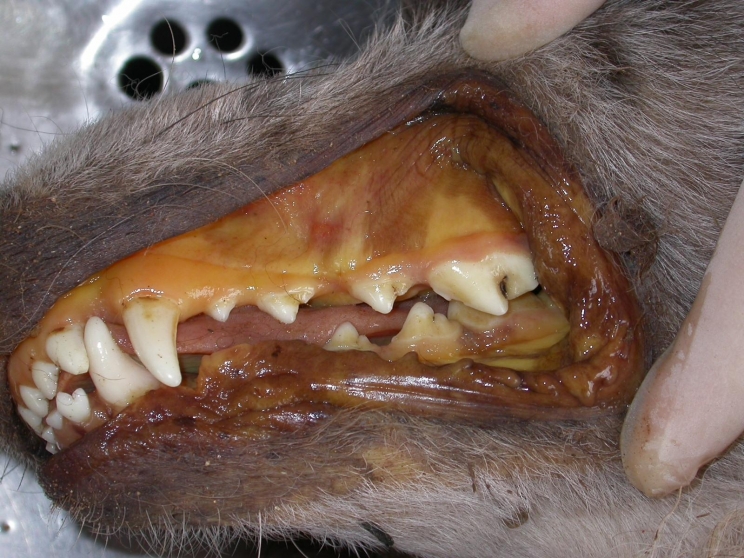
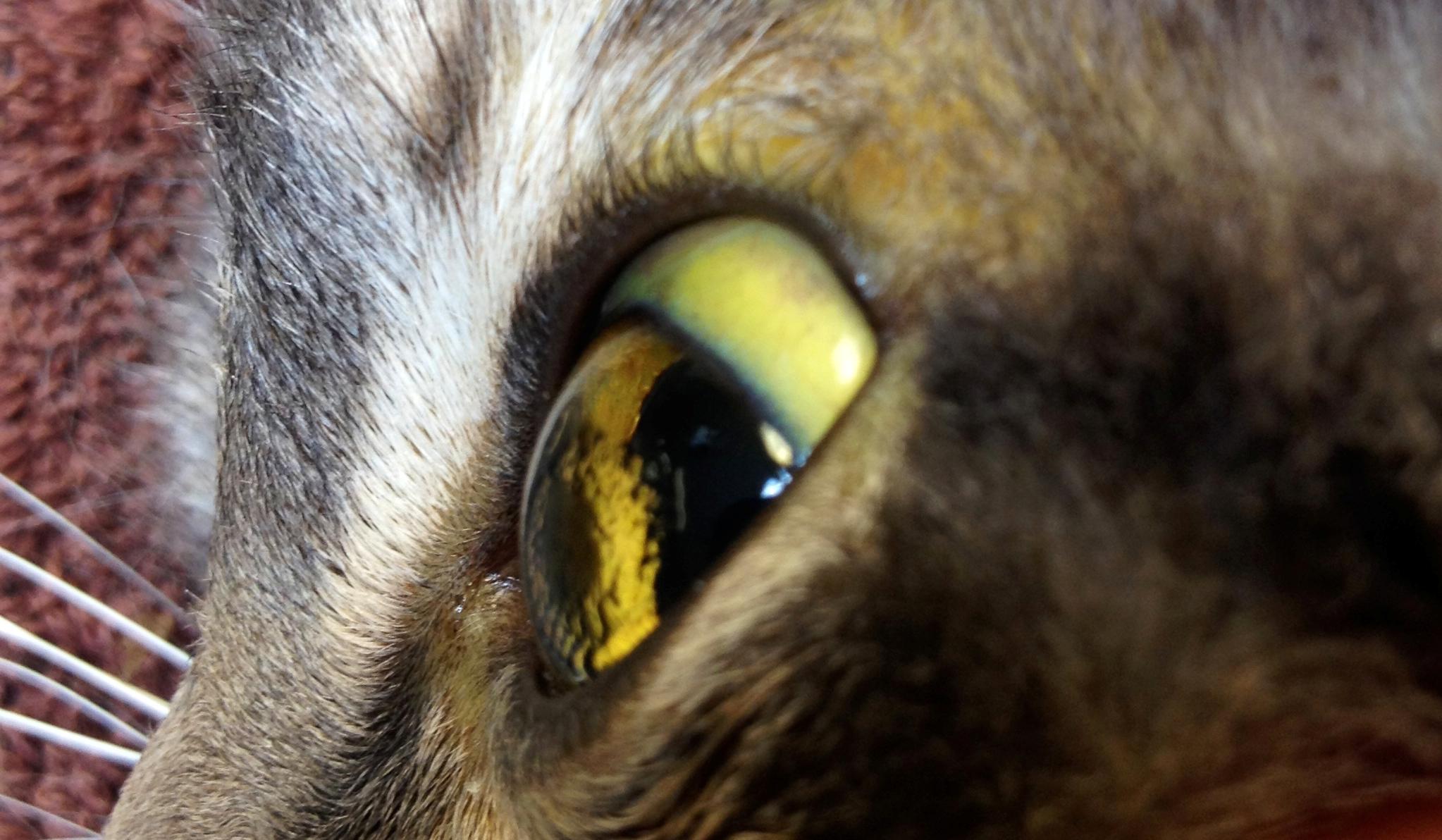
Jaundice is the presence of a yellowish discoloration of the mucous membranes. The sclera (the “white of the eye”), the inside of the lip, the tongue, and the skin—if visible where the fur is sparse—are primarily affected. This is not a normal condition, and it is advisable to make some observations to report to the veterinarian in order to understand where the problem lies.
What is jaundice
Jaundice is the abnormal presence of hemoglobin in the blood.
Hemoglobin is a colored substance normally found inside red blood cells, the cells in the animal’s body responsible for transporting oxygen in the blood. Red blood cells are destroyed after about 100 days of life, and this substance is collected by the liver, which turns it into bile, a substance useful for digesting fats.
The problem occurs when the liver is unable to “process” bilirubin (the name given to hemoglobin when it is no longer in the red blood cell) or cannot send it into the intestine. The symptom will always be the same, whatever the cause, because this substance accumulates in the mucous membranes and colors them.
Prehepatic jaundice
Prehepatic jaundice occurs when the problem is not caused by the liver being unable to “process” hemoglobin, but by an upstream problem. This problem is the excessive destruction of red blood cells, which release too much hemoglobin for the liver to process all at once. However, the portion that is processed, since the liver is functioning, all ends up in the bile.
The destruction of red blood cells is not something to take lightly, because it could be caused by certain poisons, medications, or autoimmune diseases (in which the body attacks itself), or infectious diseases. In any case, the liver is healthy, as shown by the fact that the urine is normal in color (yellowish) and the stool is also normal.
In addition, in these cases the animal will have a fever and be lethargic, and these symptoms, together with jaundice, should be a very important warning sign.
Hepatic jaundice
Hepatic jaundice occurs when the problem directly involves the liver, which cannot “process” the hemoglobin that therefore accumulates in the blood. Processed hemoglobin may also return to the blood (instead of going into the bile) because the liver is functioning poorly.
If the problem is an infectious liver disease, jaundice will appear quickly; if it is caused by liver failure (a liver disease), it will appear more slowly, and the first organ to turn yellow is the eye (the white part).
When hepatic jaundice is present, it means there is a liver problem, so an examination is necessary; if jaundice appears quickly, it may be due to a disease, and we will see symptoms such as fever and lethargy; if it develops slowly, we may not see other symptoms (besides jaundice), because it could be caused by fibrosis.
In this case, we note that the urine is darker than normal (processed bilirubin that backs up from the liver may end up in the urine), while the stool is normal in color.
Posthepatic jaundice
The final type of jaundice occurs when the problem is neither upstream nor in the liver, but downstream: the bile produced by the liver cannot reach the intestine, and, unable to move forward, backs up.
The problem is an obstruction of the bile ducts, which connect the liver to the intestine; there may be stones blocking the passage, or a severe infection or tumors that are growing.
In any case, processed bilirubin is forced back into the blood and appears in the urine, which is dark; the main change, however, is seen in the stool, which instead of being brown will be yellowish and very pale. Bile is in fact the substance that primarily gives stool its characteristic color, and if it is absent, the stool will be colored very differently.
From these characteristics and the presence of jaundice, we can understand that the problem is downstream from the liver.
Observing these characteristics is useful in helping the veterinarian make the diagnosis as promptly as possible and, in some cases, save the life of our four-legged friend.