
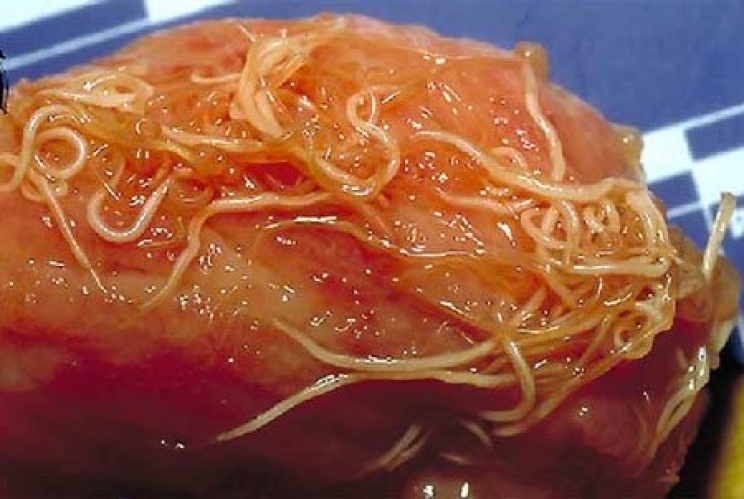
Heartworm disease is probably one of the best-known parasitic diseases among dog owners; there is no veterinarian who does not recommend heartworm treatment because, despite the disease’s very slow course, it could eventually prove fatal.
Heartworm disease can also affect cats, and in general we must pay attention to prevention because a serious mistake can be made if we do not understand how it works: dogs and cats are not vaccinated against heartworm disease; instead, drugs that kill the parasite are administered. This means that if heartworms reappear later, the treatment must also be repeated.
What it is and how it spreads
Heartworm is a parasite, more precisely a parasitic animal. Specifically, it is a very thin worm that can reach lengths of 30 cm inside our dog’s body, with a thickness similar to that of string. And while a single worm causes no problems, many 30-cm-long worms massing together can form a ball of worms that can have devastating consequences.
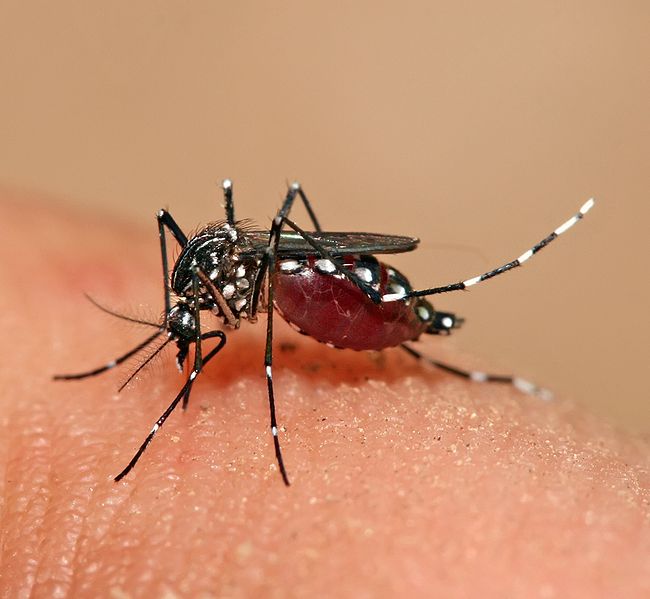
Let us proceed in order. Adult worms lay larvae so small that they are invisible to the naked eye and can be seen only under a microscope; these circulate freely in the blood. These larvae cannot, however, become adults without one essential step: the mosquito bite.
When these delightful insects bite the animal, they also take heartworm larvae, called microfilariae, into their bodies along with the other substances. In the mosquito, these undergo a transformation (which they can undergo only inside the mosquito’s body) and, so to speak, “mature”: when that mosquito bites the same animal or another animal, it injects the “mature” larvae into the blood. In about four months, the larvae become adults and settle inside the heart.
What it does
The heart is essentially a muscle, hollow inside, and blood passes through its chambers, which it pumps throughout the body. What happens if a ball of wool gets stuck in a bicycle pump? Air does not pass, or passes very poorly. And what if a ball of heartworms gets “stuck” in the heart? The result is more or less the same.
Heartworms grow very slowly and settle in the heart (on the right side, where blood carrying carbon dioxide arrives, ready to go to the lungs to be replenished with oxygen), preventing the normal passage of blood.
The symptoms of heartworm disease are therefore difficulty breathing, constant tiredness in the animal, and a dry cough caused by the fact that the body, being short of oxygen, tries to clear the airways even though there is actually no obstruction.
There is also heart failure; the heart cannot pump blood properly because of this “ball” of worms, as well as anemia caused by the fact that heartworms destroy red blood cells.
In general, the longer we wait, the worse the animal’s life expectancy will be, because heartworms continue to accumulate and eventually cause a total blockage of blood flow. If the disease reaches this stage, it can become fatal, which is why we must act as soon as possible if we see symptoms or, in any case, administer preventive treatment.
How it is treated and prevented
Treatment depends fundamentally on the stage the disease has reached: if there are heartworms in the body that have not yet become adults, we can administer drugs that kill the larvae, which, as we have noted, are microscopic. It is a very simple treatment and, in practice, has no side effects.
If adults are already present, the so-called “adulticide therapy” is carried out with a medicine that kills the worms; the problem, however, is that we can use this treatment if there are only a few heartworms (an ultrasound can show how many there are), whereas if there are many, the drug could be more dangerous than the heartworms themselves: by killing them all at once, the ball will begin to move through the blood, and we do not know where it might lodge.
If it lodged in an artery leading to the brain, it would form an embolus (an obstruction to blood flow) that would cause death within a few minutes because oxygen would be completely cut off. In these cases, surgery is used, meaning that the heart is opened manually and the heartworms removed; this treatment, with the heart weakened, does not guarantee the animal’s survival.
As for prevention, clearly, if we eliminate mosquitoes, heartworm cannot be transmitted. Keeping animals indoors with mosquito screens and providing repellents for when we go outside will make parasitic infestation very difficult.
The preventive treatment mentioned at the beginning is also always recommended: it is, in practice, the drug that kills the larvae. Considering that they grow very slowly, administering the drug at the beginning and end of mosquito season (spring and late summer) should ensure that we kill them before they can grow. It is advisable to carry out this treatment even if we do not know whether mosquitoes are actually present, to protect our animal as effectively as possible.