
Infectious hepatitis in dogs is a viral disease that has been known for many years. In the past, it often caused animals’ deaths because it is very difficult to treat, whereas today it is controlled through the vaccine. Vaccination against infectious hepatitis is, in fact, one of the first vaccinations given during a dog’s life.
This disease does not affect cats or humans in any way.
What it is and how it spreads
Infectious hepatitis in dogs is a disease caused by viruses, specifically a Mastadenovirus. The name derives from the words Adeno, gland, and Mast, referring to mammals. More precisely, the disease in dogs is caused by CAV-1, while its “sibling,” CAV-2, causes a much less serious respiratory disease.
Transmission occurs mainly through the so-called “fecal-oral cycle”: in practice, a sick dog defecates in a garden, park, or kennel. An unsuspecting healthy dog may lick the spot where the other dog defecated even if the feces have been removed (small particles may remain attached to the grass) and thus contract the disease. The virus can survive outdoors for several days at room temperature, although it is obviously easier to contract the disease in places frequented by many dogs, such as dog exercise areas in cities.
Airborne transmission or transmission through licking the muzzle is negligible, since it is very difficult for a dog to acquire the virus this way (it would have to lick an animal that is extremely ill, but the owner himself would isolate a feverish animal).
What it does
The consequences of infectious hepatitis in dogs can be very serious.
After the virus enters the body, two to four days of “silent” replication pass before symptoms appear, which are more severe in young dogs than in adults, although the disease can affect all dogs without distinction.
The first thing we notice is certainly an extremely high fever, nearly 40º, which should immediately prompt us to take the dog urgently to a veterinarian. At this stage, puppies may even die from cardiovascular collapse.
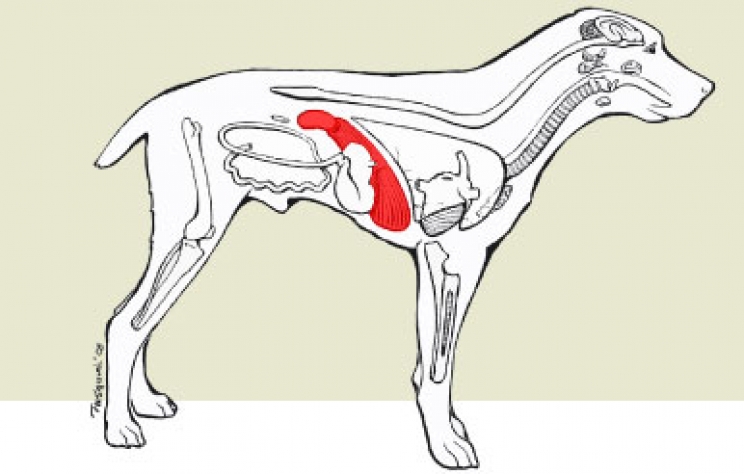
The fever generally then subsides, although the animal remains lethargic, is very thirsty and has severe abdominal pain. It whines a great deal, particularly if we touch the area behind the end of the ribs, on the right (where the liver is), indicating severe pain.
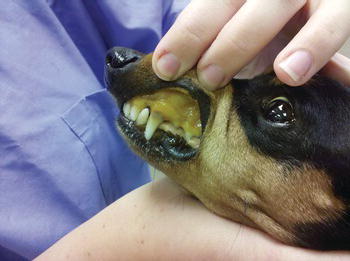
There is also vomiting and diarrhea; if we lift the lip, we see that the mucous membrane is not the usual pinkish-white color but is very reddened and tending toward yellow.
The virus causes severe infection of the liver, or hepatitis, which leads to digestive and vascular problems, since the liver is the organ that regulates, together with others, blood flow.
How it is treated and prevented
Treating infectious hepatitis is very difficult, since there is no drug capable of destroying the virus; if a dog contracts the disease, symptomatic treatment is administered to correct its most serious consequences: drugs to limit vomiting and diarrhea, reduce fever—in short, everything that may help put the body in a position to control the infection as effectively as possible.
As for prevention, the best approach is to vaccinate, especially since preventing infection by avoiding places where other dogs are present is difficult.
Vaccination is normally carried out by veterinarians as soon as the puppy reaches 60 days of age, and this procedure causes no problems, so there is no reason not to do it.
If, on the other hand, you have adopted an already adult dog, it is still advisable to vaccinate it to prevent the disease, consulting a veterinarian who will be able to determine whether the dog has already been vaccinated by a previous owner.