
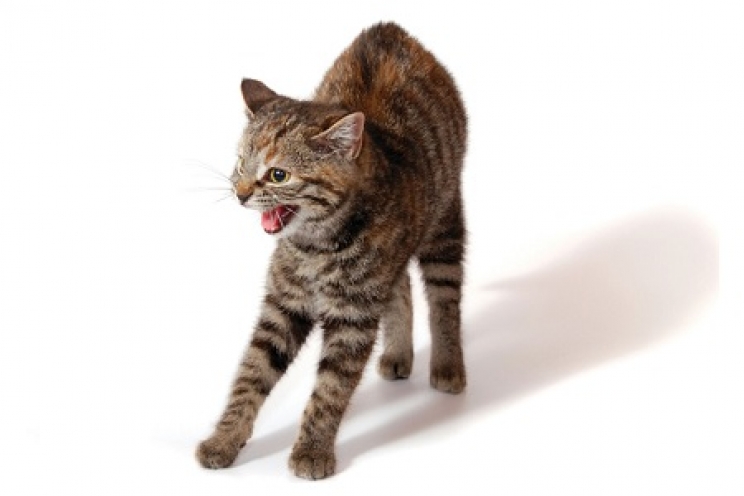
Feline hyperesthesia is a behavioral disorder that can occur at any point in a cat’s life, regardless of age, breed, or time of year. Diagnosing feline hyperesthesia is not always easy, since it is a poorly understood problem with symptoms very similar to those of other conditions. Let’s take a detailed look at what feline hyperesthesia is and how it is treated.
The term “hyperesthesia” derives from the Greek upér, above, and aisthesis, sensation, and therefore literally indicates increased sensitivity to certain stimuli, which is the main characteristic of this disorder. It is also known by the English term “rolling skin”, which fully describes the main symptom of feline hyperesthesia.
How it presents
Cats affected by this problem perform brief, rapid contractions of the back muscles, making it seem as though the skin on their back is “rolling.” Normally, felines perform this movement automatically to remove insects, water, and dirt that settle on their coat. Anyone who has dealt with a cat will surely know that, by gently running the fingertips over the animal’s back, these characteristic skin movements can be noticed, just as if we were tickling it. 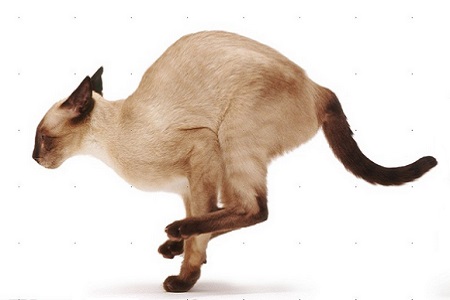
These are contractions of the so-called panniculus muscles, activated by the cat itself to move away from the irritating or itchy stimulus.
In cats with feline hyperesthesia, this phenomenon is particularly intense and occurs without any triggering cause, or at least none that is apparent. In addition to rippling of the skin on the back, other symptoms may also occur, such as:
-
The cat licks itself violently or bites its flank;
-
It suddenly starts running, even while relaxed;
-
It flees as if it were hallucinating;
-
It opens its eyes wide and has dilated pupils;
-
Its ears are laid back and lowered against its head;
-
It has the attitude and expression typical of hunting;
-
It runs in an uncoordinated manner, crossing its front and hind limbs;
-
It becomes aggressive toward people and objects;
-
It is confused;
-
It meows in a “strange” way.
These “episodes” can last from a few seconds to several minutes and generally occur early in the morning or in the evening before bedtime. A typical example of feline hyperesthesia is a cat that lies down on the bed or in its bed and, just before falling asleep, suddenly gets up and starts running.
Between episodes, the cat is completely normal and shows none of the typical symptoms.
Feline hyperesthesia can be classified as a behavioral disorder, meaning the presence of behaviors altered from those the animal normally displays. It is generally induced by various situations that trigger such a strong state of anxiety in the cat that it is channeled into its own body. Cases are not uncommon in which hyperesthesia develops into self-trauma, causing the cat to bite its body violently and inflict wounds and hair loss.
The causes
The triggering causes may vary and are entirely individual, depending on the cat’s character and personal history. In any case, they are stressful situations for the animal, such as moving house, the birth of a child, the arrival of another animal, bereavement, or abandonment. 
According to other theories, however, hyperesthesia could be a neurological problem. It appears that animals affected by this disorder have greater sensitivity in the nerve cells located in the skin. Consequently, even the slightest touch or the presence of an insect can cause the cat to react as if the stimulus were more intense, with discomfort or pain.
The symptoms of feline hyperesthesia can easily be confused with those of other conditions and diseases, such as:
-
Flea allergy dermatitis;
-
Insect bites;
-
Food allergies;
-
Neurological disorders;
-
Skin infections.
The diagnosis must therefore be made by exclusion, verifying the absence of each of these problems before reaching a conclusion.
How it is treated
Treatment is based mainly on administering certain medications capable of acting on the brain, reducing the animal’s sensitivity and consequently the frequency of the “episodes.”
A very useful suggestion is to purchase special synthetic “pheromone” diffusers, meaning substances that cats normally produce to mark their territory. These diffusers release pheromones throughout the home, helping the animal feel calmer and more confident.
Since this is nevertheless a psychological problem, it is important to contact a good behaviorist who can carefully analyze your cat’s situation and develop a personalized and effective solution.