
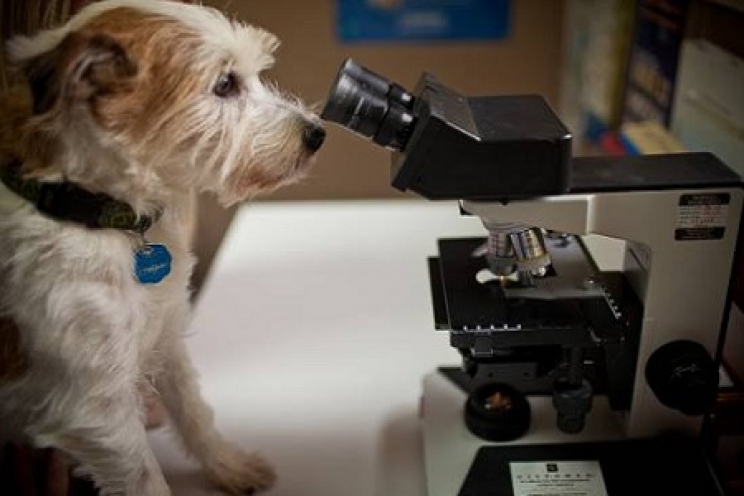
Urinalysis can provide important information about the health of dogs and cats. Unlike stool testing, however, urine testing in animals is not discussed very often. In this article, we will look at how to correctly read the results of urine tests in dogs and cats.
What is a urine test for?
Certain specific characteristics of an animal’s urine can provide important information about its general health, and especially about the kidneys and the entire urinary system.
This part of the body is particularly delicate in cats and can be affected by various problems. Dogs can also develop kidney and bladder disorders, so urinalysis can reveal their condition.
The owner’s cooperation may be important for collecting urine. For a male dog, it can be useful to keep a sterile urine collection container close at hand, ready to place it as soon as the dog lifts its leg. The squatting position adopted by female dogs and cats makes this manoeuvre more difficult.
In these cases, the veterinarian will intervene if necessary, stimulating the animal to urinate or collecting the sample directly from the bladder through cystocentesis. This technique is preferable to collecting urine during urination because the urine does not come into contact with fur or air and is therefore less contaminated.
What the urine-test results mean
Urinalysis consists of three main stages: physical examination, chemical examination and urinary sediment.
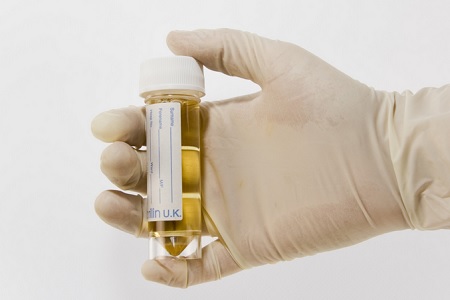
The physical examination of a urine sample requires no machinery or other diagnostic instruments, only observation and the five senses. In particular, the following are assessed:
-
Colour: normally it is pale yellow, with a more orange tint in cats, but it may appear pinkish in the presence of haemorrhage, whitish if pus is present because of bacterial infections, or greenish or brownish because of liver problems;
-
Appearance: when urine is viewed against the light, it should be clear, bright and transparent. If it becomes cloudy, opaque or contains small floating particles, there may be various problems, such as traces of pus, blood, bacteria or parasites;
-
Odour: dog and cat urine smells slightly different from human urine, so a certain garlicky note may be detected. An ammonia odour, typical of infections or kidney problems, or an odour resembling ripe fruit, in cases of diabetes, may instead be considered abnormal.
The chemical examination, on the other hand, assesses other characteristics of the urine sample, including:
-
Specific gravity: this indicates the kidneys’ ability to concentrate urine. Urine is more concentrated when the amount of water it contains is lower compared with all the other substances. To understand this better, consider that when we do not drink for a long time, our urine becomes yellower and we produce less of it, unlike when we have recently drunk a good glass of water, when it appears more transparent. Cats are among the animals that produce the most concentrated urine, which is therefore denser, darker and less abundant than dogs’ urine. The higher the specific gravity, the greater the concentration. Normally, specific gravity in cats is 1.015–1.080, while in dogs it is no more than 1.060. Specific gravity increases in cases of fever, vomiting, diarrhoea, diabetes mellitus, kidney problems and urinary-tract obstructions. Conversely, specific gravity decreases in cases of diabetes insipidus or chronic renal failure;
-
pH: explaining what pH is would require a real chemistry treatise, and two words are not enough. We can nevertheless approach the concept by considering pH as a scale that indicates whether a substance is acidic. If the pH is 7, it is considered neutral, neither acidic nor its opposite, alkaline. Below this value, the substance is considered acidic, such as coffee, certain fizzy drinks, and all detergents that include the word “acid” in their name. In all carnivores, therefore especially dogs and cats, urine is acidic, with a value between 5.5 and 7.0, because of the production of acidic substances during the digestion of proteins contained in meat. A pH that is too acidic, below 5.5, may indicate a diet too rich in protein, intense vomiting or respiratory disorders. A less acidic pH, therefore alkaline, may instead indicate bacterial infections or a protein-deficient diet;
-
Glucose: glucose should be absent from urine, because the kidneys normally filter it so that it remains in the blood and does not pass into the urine. The presence of glucose in the sample may generally indicate either that the kidneys are no longer filtering the blood properly or that there is too much glucose in the blood, for example in cases of diabetes mellitus;
-
Blood: there should not be any trace of blood in the urine. This may indicate serious problems in the urinary system. The presence of blood in the urine is called haematuria;
-
Proteins: the kidneys filter all the blood circulating through the body, allowing only waste substances to pass into the urine. If the filter is damaged, many substances needed by the body may end up in the urine. These include blood proteins, which may appear in the urine in cases of fever, physical exertion, a high-protein diet, heatstroke, urinary-system infections and inflammation, and other diseases;
-
Bilirubin: this is a coloured substance produced by the breakdown of old or damaged red blood cells by the body. Some bilirubin is reused by the liver to produce bile, and some is eliminated as urobilinogen through the urine and stool. Normally, bilirubin is therefore not eliminated in its original form in the urine, so its presence may indicate haemolytic anaemia, in which too many red blood cells are destroyed, or jaundice, meaning an increase in the blood due to liver damage or hepatic stones;
-
Urobilinogen: as mentioned above, urobilinogen is the form in which bilirubin is eliminated in the urine and stool. It must not exceed a certain threshold; otherwise, it may indicate liver problems and haemolytic anaemia;
-
Ketones: these are particular substances, also called ketone bodies, produced during the breakdown of fats. They increase in diabetic animals, in cases of prolonged fasting or on high-protein diets;
-
Nitrites: these are substances that are produced by certain types of bacteria, called Gram-positive bacteria, such as E. Coli, which is responsible for many bacterial cases of cystitis.
The final test that can be performed on a urine sample is the urinary sediment examination, carried out by analysing the urine under a microscope. With suitable magnification, it is possible to detect the presence of: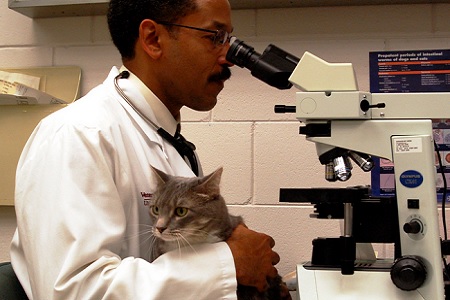
-
Leukocytes: these are white blood cells, which the body sends in the presence of inflammation, infections or bladder tumours;
-
Erythrocytes: these are red blood cells, which may be found in the urine in cases of haematuria, for example because of urinary-tract infections, stones, trauma, bladder tumours or inflammation of the prostate in dogs and male cats;
-
Epithelial cells: these are the cells lining most of the body’s structures. They can “detach” from any part of the urinary tract and end up in the urine. Their presence may indicate inflammation or neoplasms;
-
Crystals: struvite, phosphate or calcium-carbonate crystals indicate the presence of stones in the urinary tract;
-
Casts: these are cylindrical structures that can form anywhere in the urinary tract. They can be of various types. The most common in animals are waxy, erythrocyte, leukocyte, granular, epithelial and lipid casts, which indicate the presence of inflammation in the urinary system. Pigmented casts, on the other hand, appear in cases of liver problems;
-
Uric acid: this parameter is particularly important in the Dalmatian dog. This canine breed is in fact the only one to share certain characteristics with humans. When we eat protein-rich foods, we ingest many substances found, for example, in meat, such as purines. These are digested and broken down by the body until uric acid is produced, which is eliminated in the urine. In cats and all other dog breeds, uric acid can instead be broken down further into an even smaller substance that does not cause problems in the urinary system. When too much meat is eaten, as often occurred in past centuries in some cultures, the uric acid produced from purines accumulates in the joints, causing a condition known as “gout”. In addition, because uric acid forms crystals, it can easily harden in the urine while it is being formed in the kidneys, creating serious problems. For this reason, the Dalmatian needs a diet low in purines;
-
Parasites: the most common are Capillaria plica in dogs and Dioctophyma renale in dogs and cats;
-
Fungi: Candida albicans, Cryptococcus neoformans and Rhodotorula are just some of the fungi that can colonise the urinary tract of animals.
Now that you know everything about urinalysis in animals, the next time the veterinarian gives you your dog’s or cat’s test report, you will not be unprepared.